Wanting it all
like these days
as close
to summer as
this city comes
thinking in
tongues
Morgens klopft die Nebelkrähe
unsere schmutzigen
Teller ab
Monday, March 30, 2009

Friday, March 27, 2009
Day Three
There I was minding
my own business
and maybe some of
yours when morning
hit waking us thoroughly
I now allow
the alarm
to run too long
my own business
and maybe some of
yours when morning
hit waking us thoroughly
I now allow
the alarm
to run too long
Thursday, March 26, 2009
Day Two
That was
a linguistic
designation
you sank
a seed a feather
my own forgetting
editing the contents
finding you too
all of that
and the trees
really are bursting
a rash of buds
a linguistic
designation
you sank
a seed a feather
my own forgetting
editing the contents
finding you too
all of that
and the trees
really are bursting
a rash of buds
Wednesday, March 25, 2009
Day One
Fragile as fur and
now the last
this was the last
that is nowhere
apple as perfume as silt and water
fruit as bare skinned
so much gone
the pluses and minuses
even that
perfumed
new growth leafing out
a potential fragrance
now the last
this was the last
that is nowhere
apple as perfume as silt and water
fruit as bare skinned
so much gone
the pluses and minuses
even that
perfumed
new growth leafing out
a potential fragrance
Tuesday, April 17, 2007
On Aimé Césaire
Too often writers who have no such claim on the quality are hailed as daring, risky, while consequently the reading public (us) seeks out those ugliest of inanities believing ourselves daring for reading them. Thus we continue to stoke our bankrupt culture and it stokes us and we and everyone around us and the earth devolve exponentially. But in Césaire I find a writer who deserves to be called daring. Not for his politics, or his fearlessness about speaking them, though I admire him for both. Also not for his poetics, exactly, and all that they entail, though those too push against the boundaries of what we deem poetry may do. What is daring about Aimé Césaire, or at least of Return to my Native Land, is that he risks beauty. While speaking confusion, and frustration, and emptiness, and anger, the poem is unabashedly lyric and this is truly dangerous. By making the other beautiful, we risk exoticizing and/or, as my spell check suggests: eroticizing. We risk whitewashing our politics or worse – elevating the common or non-privileged experience to a position of poetic authority that it does not often posses.
But Césaire does neither. Unlike the later Eden, Eden, Eden, which shares with it the passionate commitment to expose the brutality of colonialism, colonial regimes, colonial wars, but which, for all its microscopic intensity, lacks intimacy, Return to my Native Land is both startling and moving. We see a peasant woman “urinating on her feet, stiff legs apart;” a suicide who “abetted by his epiglottis killed himself by rolling back his tongue to swallow it;” and churchgoers on Christmas where “Not only the mouths are singing, hands too, feet, buttocks, genitals, the whole fellow creature flowing in sound, voice and rhythm.” In Return to my Native Land we are not observers, as Aimé Césaire never is. We are painfully and ecstatically present and – like every participant, both welcomed and implicated.
But Césaire does neither. Unlike the later Eden, Eden, Eden, which shares with it the passionate commitment to expose the brutality of colonialism, colonial regimes, colonial wars, but which, for all its microscopic intensity, lacks intimacy, Return to my Native Land is both startling and moving. We see a peasant woman “urinating on her feet, stiff legs apart;” a suicide who “abetted by his epiglottis killed himself by rolling back his tongue to swallow it;” and churchgoers on Christmas where “Not only the mouths are singing, hands too, feet, buttocks, genitals, the whole fellow creature flowing in sound, voice and rhythm.” In Return to my Native Land we are not observers, as Aimé Césaire never is. We are painfully and ecstatically present and – like every participant, both welcomed and implicated.
Saturday, February 10, 2007
Matter
At what point did matter, when we reached out, not reach back through the void of function to that more powerful, inevitable, identity: form equal to form, material self a signature. Soap, urine, snowflake.
On words, we speak of their materiality. As if the ephemeral and purely conceptual construct language could be made concrete with a noun. But a material language might as easily be equated with function (Wittgenstein) as with a tautological self-identity: I am, therefore I am.
When we speak a thing into existence, as with magic or divine decree (let there be light), we align ourselves with an inherent possibility within language to be the thing it expresses, a thing, moreover, whose form it only borrows. When we regard language, on the other hand, in terms of its “atomic” materiality, i.e., as a set of phonemes, we restrict ourselves to an analysis of identity and difference that quickly tires.
Manuel DeLanda speaks of matter in terms of its energy potential for expressivity, places art at the crossroads between material self-identity and style. But words, lacking the physical materiality we may wish to assign to them, would seem also to lack the concomitant potential for expressivity.
Herein lies the hopelessness and pull of poetry – to “make the stony, stony,” to harness the expressivity of matter, in service of the tragically immaterial, language.
On words, we speak of their materiality. As if the ephemeral and purely conceptual construct language could be made concrete with a noun. But a material language might as easily be equated with function (Wittgenstein) as with a tautological self-identity: I am, therefore I am.
When we speak a thing into existence, as with magic or divine decree (let there be light), we align ourselves with an inherent possibility within language to be the thing it expresses, a thing, moreover, whose form it only borrows. When we regard language, on the other hand, in terms of its “atomic” materiality, i.e., as a set of phonemes, we restrict ourselves to an analysis of identity and difference that quickly tires.
Manuel DeLanda speaks of matter in terms of its energy potential for expressivity, places art at the crossroads between material self-identity and style. But words, lacking the physical materiality we may wish to assign to them, would seem also to lack the concomitant potential for expressivity.
Herein lies the hopelessness and pull of poetry – to “make the stony, stony,” to harness the expressivity of matter, in service of the tragically immaterial, language.
Wednesday, January 03, 2007
Reading
I'm reading The Literary Absolute: The Theory of Literature in German Romanticism, which Paul Hoover assigned for a class last semester. I read much of it then, but without the attention it deserved, and I am now re-reading/fully reading it. I'm fascinated by Lacoue-Labarthe and Nancy's idea that the German "Romantic" writers in ways invented the literary genre - writing that engages in its own discourse. Lacoue-Labarthe and Nancy believe that we are still within the romantic mode, but what would a truly modern romanticism look like? Most attempts seem closer to the high modern style. Like this poem I wrote back in September.
Fragments
After Empedocles, fragment 17
to look into the vast [darkness] and perceive stars burning in their fixed heaven
only the soul seems a fitting complement
[ ] void as deep and black as sky
or otherwise vast, red
sinking into vaster expanses
we are only so much flesh as the Void will relinquish
each, equally, coughed from and again [darkness]
swallowed into it
the ease of dust arising and settling
****
what [changes most] is most known to be [most the same]
and all beings forget to find
the old form in the new
Love and Strife
every lover knows [. . . ] they are the same
****
the old philosophers talk of Love, love
a metaphor for [ ] or
for closing the spaces between objects so:
by coming together we are [emptying the void of] meaninglessness,
we are closing the gaps between stars
and stars then, are not fixed, though they burn
and though we too burn until we are dust
you need only embrace me until, outside of our bodies,
in the vast spaces of the firmament,
stars collide
and the world has meaning for a time
Fragments
After Empedocles, fragment 17
to look into the vast [darkness] and perceive stars burning in their fixed heaven
only the soul seems a fitting complement
[ ] void as deep and black as sky
or otherwise vast, red
sinking into vaster expanses
we are only so much flesh as the Void will relinquish
each, equally, coughed from and again [darkness]
swallowed into it
the ease of dust arising and settling
****
what [changes most] is most known to be [most the same]
and all beings forget to find
the old form in the new
Love and Strife
every lover knows [. . . ] they are the same
****
the old philosophers talk of Love, love
a metaphor for [ ] or
for closing the spaces between objects so:
by coming together we are [emptying the void of] meaninglessness,
we are closing the gaps between stars
and stars then, are not fixed, though they burn
and though we too burn until we are dust
you need only embrace me until, outside of our bodies,
in the vast spaces of the firmament,
stars collide
and the world has meaning for a time
Monday, November 13, 2006
Or/rather -- Part II
All subjugation, all domination amount to a new interpretation.
Deleuze on Nietzsche
VI.
Thus: despotism became democracy that is, [I] re made [my] [self] you
tangling between
You propose a new opposition: between becoming and making [oneself] come
come to to heady black no repetition There is an order to in order to
In other words, you world said
“get onto your knees” and [I] heard an invitation to sex:
In other words how did translate become subjugate because
vice versa
VII.
These were not equations they were
a grammar learned:
[I] listened = [I] subjugated [myself]
[I] read = [I] subjugated [myself]
[I] voted = [I] subjugated [myself]
[I] went about [my] business = [I] was subjugated
Under you [I] was subject
newly interpreted transformed
Or, we may be be coming our selves only as other selves or we are be coming only as we exit
our
here we subject ourselves to transformation profoundly common we seek
to look as housewives and indeed we could pass You in your exotic gray
housecoat and [I] in [my] sweater set and yellow gloves
VIII.
A girl became a mother. Her transformation was complete.
Deleuze on Nietzsche
VI.
Thus: despotism became democracy that is, [I] re made [my] [self] you
tangling between
You propose a new opposition: between becoming and making [oneself] come
come to to heady black no repetition There is an order to in order to
In other words, you world said
“get onto your knees” and [I] heard an invitation to sex:
In other words how did translate become subjugate because
vice versa
VII.
These were not equations they were
a grammar learned:
[I] listened = [I] subjugated [myself]
[I] read = [I] subjugated [myself]
[I] voted = [I] subjugated [myself]
[I] went about [my] business = [I] was subjugated
Under you [I] was subject
newly interpreted transformed
Or, we may be be coming our selves only as other selves or we are be coming only as we exit
our
here we subject ourselves to transformation profoundly common we seek
to look as housewives and indeed we could pass You in your exotic gray
housecoat and [I] in [my] sweater set and yellow gloves
VIII.
A girl became a mother. Her transformation was complete.
Thursday, November 09, 2006
Running = Writing
The course of both:
1. Anticipation
2. Preparation
3. Starting cold
4. Resisting
5. Settling in
6. Pushing oneself
7. Exhaustion
8. Euphoria
1. Anticipation
2. Preparation
3. Starting cold
4. Resisting
5. Settling in
6. Pushing oneself
7. Exhaustion
8. Euphoria
Tuesday, November 07, 2006
Politics
All eyes east today for those of us in the Bay Area, but also inward. The poetic stance -- at once into the world and into th e interior? Politics, for the poet, are inescapable because by attending to language and to selfhood, we must decide how we understand each, not only in terms of ourselves, but of our fellow humans too. At best, the poem asks a reader to see in a new context, that is, in terms of the related world. At best, we might view politics (or perhaps civics) the same way. That everything might be understood in terms of one rule, in a version even older than the Christian text: do not do to others, what you would not wish done to you.
Yes, both the poem and the vote are a form of prayer.
 e interior? Politics, for the poet, are inescapable because by attending to language and to selfhood, we must decide how we understand each, not only in terms of ourselves, but of our fellow humans too. At best, the poem asks a reader to see in a new context, that is, in terms of the related world. At best, we might view politics (or perhaps civics) the same way. That everything might be understood in terms of one rule, in a version even older than the Christian text: do not do to others, what you would not wish done to you.
Yes, both the poem and the vote are a form of prayer.
Thursday, November 02, 2006
A recent poem still in process, because
Part One
Or/rather
I.
In recognition of the vast escape
between the body and her own or perhaps they were reading her
body as self as property
as property could can rise up
as property will as
we will under
Our frequent domination was the subject of discourse
frequent disintegration into
not body not [self] “my own hand my fingers/feet”
these re presentings under [their own] fingers/feet
Yes you found violence it was me
beating submission from notebooks
the black eye ink spots and
covers at an awkward angle
II.
Her own body for power of over
though the hands might rise up the voice
a spoken self
how then to command
“I speak my body
into contortions”
might not you entreat it to still under
your “own hands your fingers/feet” might not
she bid the nipples to forget order and
ordering into
She wished not to confuse
power and capitulation they were so like they
both involved losing one’s head
III. The naming of things
Call it the linguistic equivalent of paper [money][property]
he said “the world of things were not waiting to be named”
and yet
we speak “oval” and an elongated roundness manifests
a sub [super] textual element
she bids the lips open
the breath to halt
“I am un equal to” you I define
‘Dear Molly, Someday
I wish you to know how the world deals in differences and you
too will know yourself by what you are not’
[here we begin the discourse over again wherein
we seek to discover the explicit or absolute nature
of the material at hand “She spoke for instance of
a family tragedy and so perhaps Molly this could be
a deeply spiritual or at least metaphysical statement
about the nature of”]
IV. [for Erik]
Lend me your other hand the first will not reach and
then are there so many places flesh can touch and not reach
for that matter all of each other and for that reason
the poets write of eyes Lend me your other eye the
first will not reach and then are there so many souls the
eyes cannot offer
they offered to each[other] the mundane-painful-ecstasy-of-coupling
V.
She bade the self [property] the
hands to rise up body
~
Or/rather
I.
In recognition of the vast escape
between the body and her own or perhaps they were reading her
body as self as property
as property could can rise up
as property will as
we will under
Our frequent domination was the subject of discourse
frequent disintegration into
not body not [self] “my own hand my fingers/feet”
these re presentings under [their own] fingers/feet
Yes you found violence it was me
beating submission from notebooks
the black eye ink spots and
covers at an awkward angle
II.
Her own body for power of over
though the hands might rise up the voice
a spoken self
how then to command
“I speak my body
into contortions”
might not you entreat it to still under
your “own hands your fingers/feet” might not
she bid the nipples to forget order and
ordering into
She wished not to confuse
power and capitulation they were so like they
both involved losing one’s head
III. The naming of things
Call it the linguistic equivalent of paper [money][property]
he said “the world of things were not waiting to be named”
and yet
we speak “oval” and an elongated roundness manifests
a sub [super] textual element
she bids the lips open
the breath to halt
“I am un equal to” you I define
‘Dear Molly, Someday
I wish you to know how the world deals in differences and you
too will know yourself by what you are not’
[here we begin the discourse over again wherein
we seek to discover the explicit or absolute nature
of the material at hand “She spoke for instance of
a family tragedy and so perhaps Molly this could be
a deeply spiritual or at least metaphysical statement
about the nature of”]
IV. [for Erik]
Lend me your other hand the first will not reach and
then are there so many places flesh can touch and not reach
for that matter all of each other and for that reason
the poets write of eyes Lend me your other eye the
first will not reach and then are there so many souls the
eyes cannot offer
they offered to each[other] the mundane-painful-ecstasy-of-coupling
V.
She bade the self [property] the
hands to rise up body
~
Tuesday, October 31, 2006
Helping Google
Using the new Google Co-op Custom Search and my list of poetry bookmarks, I've created a search for poetry on the web. Check out the link at right, and please feel free to test and improve the search by adding your own list of poetry sites.
I'm sure Google will begin using all the custom searches users create to tweak their own general search engine, but why complain, we're all part of the information machine.
In fact, the other day Andy found a published study where scientists successfully caused cells from a rat brain to connect over a computer chip. The resulting animal/machine hybrid then learned to successfully maneuver a jet in multiple conditions using a flight simulator. No joke.
I'm sure Google will begin using all the custom searches users create to tweak their own general search engine, but why complain, we're all part of the information machine.
In fact, the other day Andy found a published study where scientists successfully caused cells from a rat brain to connect over a computer chip. The resulting animal/machine hybrid then learned to successfully maneuver a jet in multiple conditions using a flight simulator. No joke.
Monday, June 19, 2006
Realism
 The word realism has been used to describe works of art since the mid 19th century. Even today, certain kinds of painting, theater, film and literature are understood as realism by the general public. But most artists recognize how dangerous and inept such a term becomes when one seeks to describe art in the 21st century.
There is nothing real about a scene painted on canvas except the canvas and the paint itself. Likewise, there is nothing real about a narrative except the paper and the ink it's printed in. Both are invented. Both rely on a medium, which is the only part of the work that is materially real.
Still, it seems somewhat absurd to limit the term to all but the entirely abstract, though some would. Better it seems, would be to recognize realism as any work of art that does not seek to create an illusion, or that consciously disrupts the illusion it creates.
But to me, only the first sort or realism has the possibility of conveying life and/or emotional weight. The problem in poetry is that so many poets choose versions of disruption (i.e. sur-realism), while ignoring all of the kinds of material realisms that could give their work life.
Sunday, June 04, 2006
Small Desk Press Launch

I think sometimes as poets we think of ourselves as more isolated and misunderstood than we are. Last night, nearly 100 people came out to help launch Small Desk Press -- a joint project of Truong Tran and the Bonebox poets. A number of people donated art for the silent auction, and many more put in generous bids on the work. In a climate where the mainstream "emerging talent" have often published several books and have tenure track jobs, it's great to be part of a community of writers dedicated to promoting and supporting the true emerging talent. Truong is also an amazing visual artist, and I'm happy to say I came away with one of his wonderful boxes -- this one dedicated Bonebox.
Wednesday, May 17, 2006
The role of the spectator
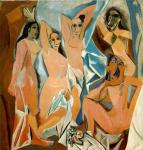 "The work becomes not so much Picasso's statement as a challenge to us to respond and, by responding, to give it meaning. In modernism altogether, art (not merely visual art alone) has been reoriented, placing the onus on the relationship not between the artist and the work of art, but rather between the work and the spectator."
From An Introduction to Les Demoiselles d'Avignon, by Christopher Green
Picasso painted Les Demoiselles in 1907, but it's worth considering in what ways we as writers challenge our readers to engage in a similar sort of viewing. In a painting, the subject's gaze can invite the viewer in. In a poem, what presents a similar invitation--at once seductive and confrontational?
Friday, May 12, 2006
The Best Work of American Fiction of the Last 25 Years?
Underworld, by Don DeLillo (1997)
Blood Meridian, by Cormac McCarthy (1985)
Rabbit Angstrom: The Four Novels John Updike (1995)(1990) (1981) (1971) (1960)
American Pastoral Philip Roth (1997)
A Confederacy of Dunces, by John Kennedy Toole (1980)
Housekeeping, by Marilynne Robinson (1980)
Winter's Tale, by Mark Helprin (1983)
White Noise, by Don DeLillo (1985)
The Counterlife, by Philip Roth (1986)
Libra, by Don DeLillo (1988)
Where I'm Calling From, by Raymond Carver (1988)
The Things They Carried, by Tim O'Brien (1990)
Mating, by Norman Rush (1991)
Jesus' Son, by Denis Johnson (1992)
Operation Shylock, by Philip Roth (1993)
Independence Day, by Richard Ford (1995)
Sabbath's Theater, by Philip Roth (1995)
Border Trilogy, by Cormac McCarthy (1999)(1998) (1994)
The Human Stain, by Philip Roth (2000)
The Known World, by Edward P. Jones (2003)
The Plot Against America, by Philip Roth (2004)
Thursday, May 11, 2006
Negative Space
In the December '03 issue of The Writers's Chronicle, Jennifer Grow draws a parallel between the use of negative space in visual arts and its similar use in fiction. An interesting idea and one just as applicable to poetry to be sure. In fact, I think poets do this naturally without defining their indirection as defining the "negative space." But it seems like a good way of thinking about the way many of us work. Once we recognize what we're doing, it's possible to critically determine if it will be effective to continue doing whatever it is one did by accident, or to find ways to improve or subvert one's practice. For me, I think I often write the negative space, and leave the positive space entirely open, which is why my process this has so much to do with layering and replacing.
 of negative space in visual arts and its similar use in fiction. An interesting idea and one just as applicable to poetry to be sure. In fact, I think poets do this naturally without defining their indirection as defining the "negative space." But it seems like a good way of thinking about the way many of us work. Once we recognize what we're doing, it's possible to critically determine if it will be effective to continue doing whatever it is one did by accident, or to find ways to improve or subvert one's practice. For me, I think I often write the negative space, and leave the positive space entirely open, which is why my process this has so much to do with layering and replacing.
Wednesday, May 10, 2006
Subscribe to:
Posts (Atom)


